
LAST WEEK’S KEY FACTORS AND MAIN TRENDS IN THE DEVELOPMENT OF THE SITUATION AROUND UKRAINE
(July 11-17, 2016)
I. The Main Resonance Events in the Development of the Situation around Ukraine
After the Summits of the EU and NATO in late June — early July this year, which took key decisions on extension of sanctions against Russia, and strengthening NATO’s military presence in the Central European and Baltic countries, the main factor to influence the situation around Ukraine, as well as the interests and security of our State, is the prospects of Moscow-the West confrontation going onto a qualitatively new level.
Evidence of the reality of these prospects was the results of the meeting of the Russia-NATO Council on 13 July, 2016, during which were discussed: the situation around Ukraine and in zones of other conflicts; the results of the Warsaw Summit of the Alliance, as well as the military activity in Europe and reducing the risks. Discussion of these issues showed the presence of deep disagreements between Russia and NATO on almost all matters.
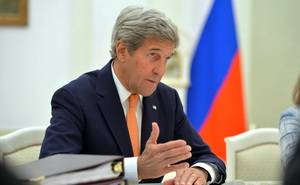 Despite the positive estimates of US Secretary of State J. Kerry’s visit to Moscow on July 14-15, 2016, the results of his talks with the leadership of the Russian Federation also confirmed the disagreements between the parties on the Ukrainian issue. At this, a certain understanding achieved by the United States and Russia on the need to deepen cooperation between the two countries in the fight against Islamic extremism will not be able to influence their attitude towards Ukraine.
The increased tensions between Russia and the United States, NATO and the EU makes a decisive influence on the situation in the conflict zone in the East of Ukraine and the development of military-political processes around our State.
II. Russia’s Armed Aggression against Ukraine
2.1. The East of Ukraine (the ATO zone)
As expected, during and after the NATO Summit in Warsaw, as well as on the eve of the meeting of the Trilateral Contact Group in Minsk on July 13, 2016, Russia did step up military operations in the conflict zone in the Donbas. Evidence of this is a significant increase in the number of attacks on the positions of the ATO forces and civilian settlements along almost the whole front line with a peak intensity of about 100 attacks a day. Armed militant groups also resumed their attempts to storm the defended posts of the Ukrainian Armed Forces.
At the same time, in order to create the grounds for accusing Ukraine of violation of the Minsk Agreements, there were shellings of the uncontrolled by Ukraine settlements, in particular of residential areas of Donetsk and Horlivka. At this, the enemy tried to conceal its actions by blocking the access of observers of the Joint OSCE Monitoring Mission to the most problematic areas in the conflict zone.
Besides, Russia and the controlled by it leaders of the self-proclaimed republics have increased political pressure on Ukraine in terms of forcing our State to agree to Russia’s conditions of the elections in the Donbas.
July 12, 2016, the leader of the “DPR” O. Zakharchenko made a statement about the readiness of the self-proclaimed republic to hold the elections on its territory this autumn without agreement with Ukraine.
To demonstrate the “possibility of holding elections in the situation of the armed conflict in the region”, in September 2016 in the “DPR” and “LPR ” they are planning to organize the so-called “primaries” which are advertised as “advanced” or “training” elections. They have invited international observers from the EU, the OSCE and other organizations, as well as journalists to participate in holding the “elections.”
The positions of the leaders of the “DPR” and “LPR” are openly supported by the Kremlin, which is trying to attract to its side the European partners of Ukraine. During the telephone conversation with German Chancellor A. Merkel and French President F. Hollande on July 13, 2016, the head of the Russian state V. Putin accused Ukraine of “strengthening the military operations in the Donbas”, and in fact confirmed Russia’s conditions of “settlement” of the conflict in the region. In particular, among these conditions he mentioned Ukraine’s recognition of a special status of the “DPR” and “LPR” and agreeing to holding the elections in the breakaway republics without any additional requirements.
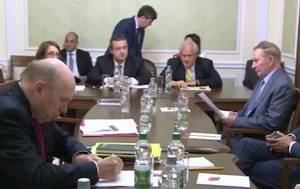 Against this background, on July 13, 2016 in Minsk was held a regular meeting of the Trilateral Contact Group. They discussed issues of strengthening security in the conflict zone, the principles of the elections in the occupied territories, plans to restore railway traffic and assistance to the local population, as well as the prisoner exchange issue.
Besides, the Ukrainian side once again raised the question about the need to create a new sub-group to solve the problem of returning under Ukraine’s control of its eastern border. Ukraine’s initiative was supported by the OSCE Special Representative for Trilateral Contact Group M. Saydik, but Russia again actually ignored it.
The meeting resulted in agreement on demining and reconstructing the railway spans Mykytivka — Mayorsk and Yasynovata — Skotovata (important for coal supplies to Ukrainian TPPs). At the same time, Ukraine confirmed its position on the impossibility of holding elections in the Donbas in the situation of continuing hostilities and opened borders. In turn, to put pressure on Ukraine, the Russian side once again blocked the process of exchange of prisoners.
Unresolved also remained the questions of disengagement of the parties and a new demarcation line. Thus, under the guise of the need to “continue work on harmonizing the existing differences,” Russia preserved possibilities for further provocations in the conflict zone.
In general, the results of the meeting of the Tripartite Contact Group reaffirmed the position of Russia, which demonstrates a willingness to implement certain provisions of the Minsk Agreements, but avoids resolving the most problematic issues of settlement of the conflict in the Donbas.
2.2. The Crimean Peninsula
Russia’s occupation of the Crimea is the reason for the very difficult situation in the tourism sector of the Peninsula. According to Russian experts, during 2015 — the first half of 2016, investments into the development of the Crimean resort infrastructure have declined by more than ten times. The reason for this is called the Western sanctions that “scare off” both foreign and Russian investors from the Crimea. Besides, the problems in the Russian economy make the Russian leadership significantly reduce budgetary spending for the implementation of investment programs in the Crimean Peninsula.
 There are also significant problems in the energy system of the Crimea. In particular, on July 10, 2016 a part of Sevastopol and several neighboring villages were turned off from the electric supply. The reason for this is the abnormal mode of the Crimean electric power system after its switching to the “energy bridge” from the Taman Peninsula. Total energy losses from the Crimea’s turning to getting electric power from Russia are estimated in the amount of 2.5 billion rubles.
In this situation, the Russian Federation’s government is trying to prevent social unrest in the Crimea by increasing pressure on the opponents of V. Putin’s regime. From July 11, 2016 the federal list of organizations and individuals involved in extremism and terrorism includes Mejlis of the Crimean Tatars and 22 natives of the Crimean Peninsula. The list mainly includes the Crimean journalists, political prisoners and social activists who are against Russia’s annexation of the Crimea.
2.3. Other Aspects of the Russian Federation’s Actions against Ukraine and the West
The Russian Federation’s leadership shows an extremely negative reaction to the decisions of the Warsaw Summit of the Alliance. According to the Permanent Representative of Russia to NATO A. Grushko, Moscow would have to take measures to maintain the balance of forces with NATO and to ensure its security. At this, he described the plans to deploy combat units of the Alliance in Poland and the Baltic States, as a “violation” of the NATO-Russia Founding Act. At the same time, within the framework of Russia’s pressure on the USA and NATO, A. Grushko questioned the possibility of continuing the bilateral negotiations on the reduction of strategic offensive arms as a result of “exhaustion of the potential of the negotiating process”.
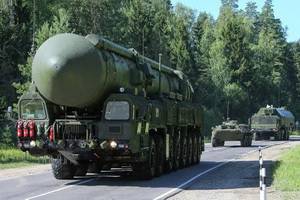 Russia’s political reaction to the results of the NATO Summit in Warsaw was confirmed by large-scale events aimed at demonstration of military force. July 11, 2016 the Russian Armed Forces started trainings of the Strategic Missile Forces (RVSN), which cover almost the entire country. Almost 400 pieces of military equipment, including mobile missile systems “Topol-M” and “Yars” participate in the event. They are mastering bringing missiles to field positions, as well as actual launchings. By the end of the year, the Strategic Missile Forces will have held more than 40 Staff and about 20 Command and Staff trainings and about 10 tactical and 50 special-to-arm tactical exercises.
Besides, the RF Ministry of Defence has announced plans for further expansion of its military presence in the Arctic. In particular, by 2020, they are planning to have built ten new airports on six islands in this region.
At the same time, according to German secret services, the Russian Federation’s leadership is actively using ties in Russian and German criminal organizations to undermine the German economy, as well as to influence individual politicians and political forces with the aim of weakening A. Merkel’s positions. This Moscow’s activity has become particularly active with the start of preparations of parliamentary elections in the Federal Republic of Germany (autumn of 2017).
Apart from this, we should not exclude the Russian criminals’ ties with terrorist organizations in Europe, which can be used also in Russia’s favour and to destabilize the situation in NATO and the EU countries through organization of terrorist attacks on their territories. In particular, the evidence for this is called the terrorist attack in Nice and explosions in Brussels (near the European Parliament) on 14 July, 2016.
III. Ukraine and Its Allies and Partners
3.1. Leading Western countries
Leading Western countries retain a positive attitude to Ukraine and continue their policy of deterring Russia and putting pressure on it.
The USA. July 14, 2016, the Senate — the upper house of the US Congress — approved the defenсe ministry draft budget for 2017, which provides for the allocation of financial assistance to Ukraine in the amount of 250 million US dollars. The same amount can be allocated to Ukraine by the decision of the Minister of Defenсe in coordination with the US Secretary of State (from 2014 to 2016 for military needs of Ukraine has been allocated more than 600 million US dollars). Taking into account all forms of support to Ukraine in the sphere of security, the United States has announced its turning from strategy of responding to crises — to a long-term partnership with our country in order to strengthen the Armed Forces of Ukraine and to ensure their interoperability with NATO.
 Besides, July 14, 2016, the Committee of the US House of Representatives adopted the “Stability and Democracy for Ukraine Act”, which provides for the provision of assistance to Ukraine in the restoration of the sovereignty and territorial integrity, democratic reforms, as well as deterring Russia. The draft document provides for the right of the US President to impose sanctions against specific Russian citizens, including a ban on American companies and entrepreneurs’ conducting joint activities with them. At the same time, a veto is imposed on the possibility of the US President’s lifting sanctions against Russia until restoration of Ukraine’s sovereignty over the Crimea or determination of the status of the Peninsula under international supervision and its approval by Kyiv. At the same time, the Document provides for the possibility of easing the sanctions against Russia in case of its fulfillment of the Minsk Agreements.
Canada. A key event in the development of Ukraine’s international cooperation was Prime Minister of Canada Justin Trudeau’s visit to our country on July 10-11, 2016. The head of the Canadian government expressed support for Ukraine in its confrontation with Russia, and blamed Russia for violation of the Minsk Agreements and the deterioration of the situation in the Donbas.
The main result of J. Trudeau’s visit to Ukraine was the signing of the Agreement on Free Trade Area (FTA) between Ukraine and Canada, as well as an agreement on the beginning of consultations on simplification of visa regime between the two countries. Besides, the Canadian side did not exclude the possibility of supply of lethal weapons to Ukraine.
Implementation of these plans will be important for Ukraine in the political, economic and security spheres. Thus, the FTA between Ukraine and Canada will contribute to strengthening our country’s international positions, and will expand the access of Ukrainian producers to the Canadian market. In its turn, Canada’s attitude towards the prospects of weapons supplies to Ukraine may have an impact on the positions of other NATO countries on this issue.
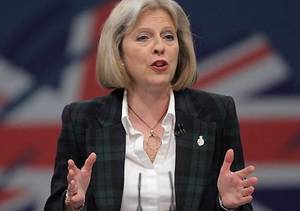 The United Kingdom. July 13, 2016 Theresa May became the new Prime Minister of the country having replaced D. Cameron (resigned after the UK referendum on the country’s exit from the EU). Before this, T. May had served as Minister of Internal Affairs of Great Britain and became the second woman in history — the head of the British government after Margaret Thatcher. According to T. May, the priority directions of her policy will be to ensure “comfortable” conditions of the country’s leaving the EU, equal standards of life of the British population, as well as tightening of immigration rules. At the same time, according to European experts, the United Kingdom will maintain close ties with the EU and will adhere to its obligations to NATO. London will also continue supporting Ukraine. For example, T. May stands firm in antagonism with V. Putin’s regime’s policy and not recognizing Russia’s annexation of the Crimea.
Germany. July 13, 2016, the German government adopted a new “White Book”, which determines the main directions of the country’s strategy in the sphere of security and defence, taking into account changes in the development of the situation in the world and in Europe. A feature of the new document is the statement of the fact of deterioration of relations between Germany and Russia as a result of Moscow’s armed aggression against Ukraine. Besides, the document points out Germany’s intentions to increase the country’s role and significance in resolving global and European problems, and to become one of the world leaders.
3.2. The European Union
The leadership of the EU keeps increasing attention to Ukraine, and demonstrates the support to the reform process in our country and our European integration plans.
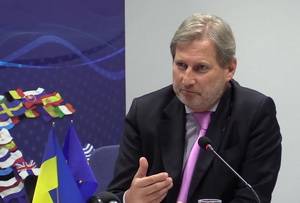 In particular, July 11, 2016 Ukraine was visited by European Commissioner for Enlargement and Neighbourhood Policy J. Hahn. The representative of the European Union welcomed the results of reforms in Ukraine and expressed the EU’s intention to continue providing assistance in further reforms. For example, the European Commission plans to allocate 50 million Euros for Ukraine’s implementation of the anti-corruption program and 90 million Euros for civil service reform, and to support measures to improve the efficiency of the Ukrainian energy system. Besides, J. Hahn confirmed the possibility of the European Union’s taking a final decision on simplification of visa regime with Ukraine in autumn this year.
In turn, on July 12, 2016, as part of the EU’s obligations to Ukraine, the European Investment Bank sent the first tranche of financial assistance for restoration of the infrastructure of the Donbas in the amount of 30 million Euros.
A positive trend for Ukraine is the firmness of the positions of the leading European institutions on maintaining the sanctions against Russia. In particular, the main European organization working with government bonds — Euroclear — has refused to work with the new ten-year federal loan bonds of the Russian Federation.
The sequence of the sanctions policy of the European Union towards V. Putin’s regime has been confirmed also by the former EU Commissioner for Enlargement and Neighbourhood Policy S. Fule. According to him, all the talks about the possibility of lifting sanctions against Russia before its fulfillment of the Minsk Agreements are exclusively political speculations, which in most cases are spread by Moscow.
IV. Other Important Trends and Developments Concerning Ukraine’s National Interests
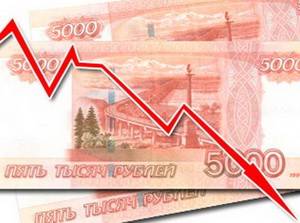 A significant problem in the implementation of Moscow’s strategic plans, including in respect of Ukraine, remains the further deterioration of the Russian economy and its financial system. Thus, according to the Central Bank of the Russian Federation, within the past six months, for the first time since 2014, the volume of currency outflow from the country has exceeded its revenues. The reason for this is considered the stagnation of Russia’s foreign trade, as well as the drop in global energy carriers’ prices, which form the basis of Russia’s exports.
In the context of a significant reduction of the Reserve Fund of the Russian Federation, which can be completely exhausted already in 2017, this trend makes the Russian government strengthen the rigidity of the budget savings.
According to the Russian Prime Minister D. Medvedev, in the nearest future the Russian leadership will not be able to increase pensions and salaries of public sector employees. At the same time, due to lack of funds, the Russian government has canceled the program of ration cards for the poor.
Moreover, the financial problems already occur in the power structures of Russia. According to the Ministry of Energy Engineering, by the end of the year the debt of the units of the Defence Ministry, Interior Ministry, Emergencies Ministry, Federal Security Service and Ministry of Justice of Russia for the consumed electricity and heat may reach 7 billion rubles.
V. Main Trends in the Development of the Situation around Ukraine in the Future
5.1. Key Events That Will Be Most Important for Ukraine
 In the nearest future the situation around Ukraine will be determined by the effects of resonance events that have occurred in recent years — namely, the EU and NATO Summits, the results of which cause Russia’s sharp reaction. In this regard, we should expect further steps on both sides to demonstrate the firmness of their positions, including loud political statements, demonstrations of force, new sanctions and counter-sanctions, as well as the use of other forms of mutual pressure.
All this will directly influence Ukraine, which is at the intersection of the interests of the West and Russia. Thus, worsening of the conflict between the US, NATO, EU and Russia will lead to increased military and political tension in the Central-Eastern Europe and in the Black Sea region. At this, on the one hand, Ukraine’s Western partners will continue providing assistance to our country, and on the other — Ukraine will remain a subject to the Russian Federation’s increased pressure. In particular, within the framework of such pressure, the Russian Federation can organize all sorts of provocations against the Ukrainian-American exercises “Sea Breeze 2016”.
5.2. Prospects for the Development of the Situation in the Conflict Zone on the Territory of Ukraine
Taking into consideration Ukraine’s refusal to make concessions to Russia in the implementation of Russian terms of the “settlement” of the situation in the Donbas, as well as aggravation of confrontation between Moscow and the United States, NATO and the EU after the Summits of the European Union and the North Atlantic Alliance, we should expect Moscow’s further intensification of the armed conflict in the Donbas. As before, the Putin regime’s actions will be aimed at putting pressure on Ukraine and at demonstration of firmness of Russia’s positions in its opposing the West.
At this, along with intensification of shelling positions of the ATO forces and peaceful settlements, and intensification of actions of sabotage and reconnaissance groups and attempts to storm the defensive posts of the Armed Forces of Ukraine, we should not exclude a possibility the Russian-terrorist forces’ local offensives on some tactical directions. Based on the situation in the zone of the ATO, first of all, such actions of the enemy can be expected on the western flank of the Svetlodarsk arc (near Horlivka), on the northern and western outskirts of Donetsk (in the areas of Mayorsk and Pisky) as well as near Avdiivka, Maryinka and Shyrokino.
5.3. Other Events that Will Affect the Interests of Ukraine
After the European Commissioner for Enlargement and Neighbourhood Policy J. Hahn’s visit to Ukraine, in the nearest future our State is planned to be visited also by the Vice-President of the European Commission, M. Maroš Šefčovič and the European Commissioner for Economy and Society G. Oettinger. The purpose of these visits will be getting acquainted with the progress of reforms in Ukraine in their respective fields, as well as clarification of spheres of the EU’s assistance to our State. The EU’s increased attention to Ukraine is confirmed by its importance as one of the determining factors of influence on the interests and security of the united Europe.

